
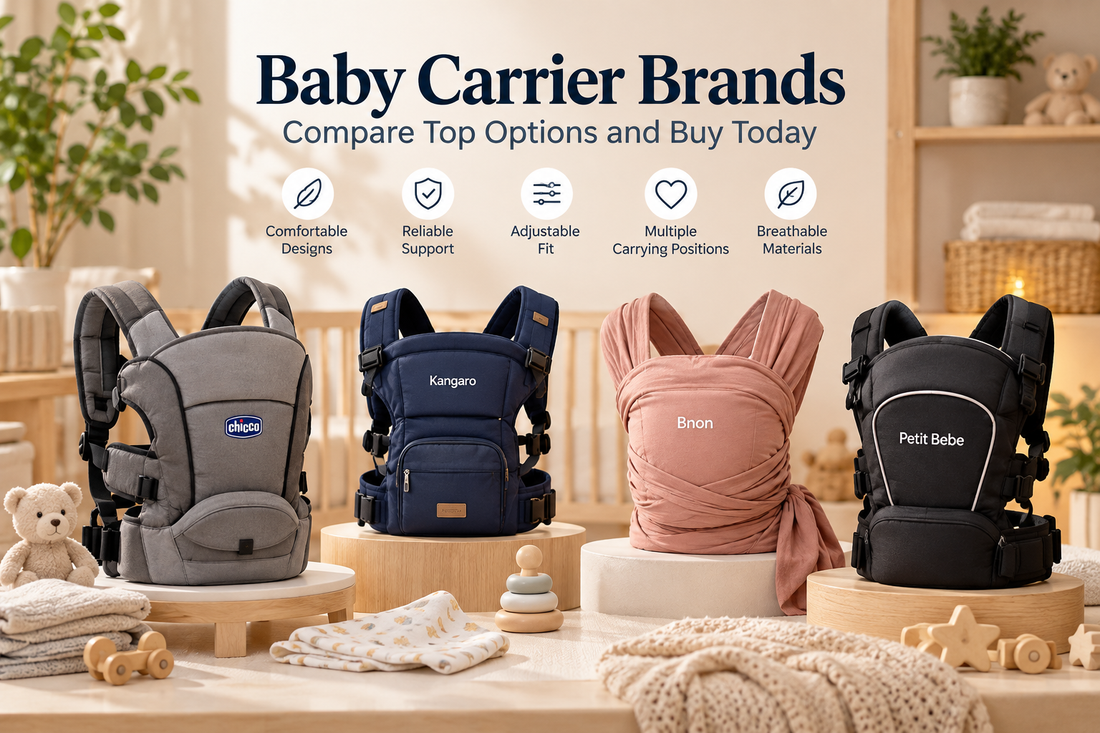
A baby front carrier can make everyday movement easier when you want your child close without carrying them constantly in your arms. The design keeps the baby positioned in front of the caregiver, making it useful for short walks, shopping, travel, and daily routines where easy monitoring matters.
The important decision is not simply whether to buy a carrier. Parents need to choose the right front position, support level, size, and carrier style for their child’s current stage. This guide focuses on those decisions so you can compare soft wraps, structured designs, and adjustable carriers with more confidence.
Start With the Front Carrying Position

Before comparing brands or fabrics, decide how you expect to use a baby front carrier.
Most front carrying falls into two broad categories: baby facing the caregiver and baby facing outward. These positions are not interchangeable at every stage.
|
Front Position |
Main Benefit |
What Matters Most |
|
Facing caregiver |
Close contact and easy monitoring |
Baby support and correct fit |
|
Facing outward |
Wider view of surroundings |
Developmental readiness |
|
Soft wrap front carry |
Flexible close fit |
Correct wrapping technique |
|
Structured front carry |
Defined straps and support |
Proper adjustment |
Parents can browse the Baby Carriers collection to compare wrap and structured front-carrying styles.
Choosing the correct position first makes the rest of the buying process much clearer.
Why Front Carrying Works for Everyday Life
A baby front carrier keeps the child where the caregiver can easily see and reach them. That can make it practical during stages when parents want frequent visual checks without giving up both hands.
Front carrying can work especially well for:
-
Short neighbourhood walks
-
Quick shopping trips
-
Family visits
-
Moving through crowded places
-
Airport or station travel
-
Daily errands
-
Short periods around the home
It can also be easier to learn than some back-carrying setups because the baby remains directly in front of the caregiver.
For many families, front carrying becomes useful because it fits naturally into ordinary routines rather than only special outings.
Inward Facing Comes First for Many Babies
An inward-facing baby front carrier positions the baby toward the caregiver rather than toward the surroundings.
This configuration can make monitoring easier because parents can check the baby’s face and position without removing the carrier.
Important points include:
-
Keep the baby close to the caregiver.
-
Follow the carrier’s head-support instructions.
-
Check the baby’s face regularly.
-
Keep straps or fabric properly adjusted.
-
Use only positions approved for the product.
An inward position can be useful during earlier stages, but the exact starting age still depends on the carrier.
Close carrying should feel secure rather than loose or unstable.
When Front Facing May Become an Option
A front facing baby carrier should not automatically be used just because a child appears interested in looking around.
The baby should meet the developmental requirements specified by the carrier manufacturer. Different products can have different rules.
Before changing from inward to outward facing, check:
-
Head control
-
Upper-body stability
-
Minimum age where specified
-
Minimum weight
-
Carrier adjustment
-
Approved front-facing instructions
A baby front carrier offering several positions does not mean every position is suitable from birth.
Changing position should follow development and product guidance rather than curiosity alone.
A Simple Front Carrier Stage Guide
Parents often search by age, but development and product limits matter too.
Here is a practical way to think about front carrying.
|
Stage |
Main Focus |
|
Newborn |
Approved newborn support and inward carrying |
|
Early infant |
Head and neck support |
|
Improving head control |
Fit and carrier adjustment |
|
Older infant |
Review approved front-facing positions |
|
Heavier baby |
Stronger caregiver support |
|
Toddler |
Weight limits and parent comfort |
The best baby front carrier for one stage may feel very different from the best option several months later.
Think of the carrier as equipment that needs regular adjustment as your child grows.
Choosing a Newborn Front Carrier
A newborn front carrier needs to be specifically suitable for the earliest stage.
Softness alone is not enough. Parents should check whether the product is actually designed for newborn weight, size, and support needs.
Look for:
-
Clear newborn approval
-
Minimum weight information
-
Head support
-
Secure inward position
-
Appropriate body support
-
Simple adjustment
-
Clear fitting instructions
The Bnon Baby Wrap Carrier currently available at Mommy’s Mart is listed as suitable from birth and offers a soft wrap-style alternative to structured carriers.
A newborn setup should prioritise correct support over extra carrying positions.
Soft Wrap or Structured Front Carrier

Parents choosing a baby front carrier usually face an early decision between soft fabric and a more structured buckle design.
Neither format is automatically better.
|
Feature |
Soft Wrap |
Structured Carrier |
|
Main support |
Fabric tension |
Straps and carrier body |
|
Storage |
Very compact |
Usually larger |
|
Adjustment |
Wrapping technique |
Buckles and straps |
|
Padding |
Minimal |
Often included |
|
Waist support |
Usually no rigid belt |
Common |
|
Learning style |
Requires tying practice |
Requires strap adjustment |
A wrap can work well when flexibility and compact storage matter. A structured carrier may appeal to parents who prefer defined adjustment points.
Choose according to the setup you feel confident repeating correctly.
The 60-Second Fit Check
Instead of judging a baby front carrier only by how it feels when first worn, use a quick fit check before leaving home.
Check the baby
Confirm that the baby is positioned according to the carrier instructions and remains easy to monitor.
Check the shoulders
Both shoulder straps should feel balanced rather than one side carrying most of the load.
Check the waist
If the carrier includes waist support, make sure it sits where the manufacturer intends.
Check movement
Take a short walk around the room. The carrier should remain stable instead of bouncing or pulling away.
Check again
Reassess the setup after a few minutes.
A short fit test can prevent a small adjustment problem from becoming uncomfortable during a longer outing.
What Makes an Ergonomic Front Carrier
An ergonomic front carrier should provide practical support for two people at the same time: the child and the caregiver.
Parents sometimes focus only on padding, but good support depends on the complete design.
For the child, compare:
-
Seat shape
-
Back support
-
Head support where needed
-
Carrier panel fit
-
Approved leg position
For the caregiver, compare:
-
Shoulder straps
-
Waist support
-
Weight distribution
-
Adjustment range
The Chicco Soft and Dream Baby Carrier is one structured option currently listed by Mommy’s Mart with an adjustable seat, padded shoulder straps, waist support, and breathable sections.
A supportive baby front carrier should feel balanced, not simply heavily padded.
When an Adjustable Front Carrier Matters
An adjustable front carrier becomes particularly useful when the carrier will be shared between caregivers or used across several stages.
Useful adjustment points can include:
-
Shoulder strap length
-
Waist belt size
-
Carrier panel width
-
Seat width
-
Side straps
-
Head-support position
The Kangaro MAX Carrier currently lists adjustable height and width and a stated range of 4–25 kg.
An adjustable baby front carrier can offer better long-term value when those adjustments genuinely match your child’s growth.
Good adjustability is more useful than having extra features you never use.
Choose by Routine, Not Just Features
A baby front carrier for someone taking 15-minute shopping trips does not need to solve the same problems as one worn during longer walks.
For quick errands
Prioritise easy setup and compact storage.
For daily walking
Pay more attention to shoulder and waist support.
For travel
Look at packed size, carrier weight, and ease of putting it on.
For shared use
Adjustment range becomes more important.
For warm weather
Breathable materials can become a priority.
Matching the carrier to the activity can eliminate many unsuitable options immediately.
Front Carrier vs Hip Seat

A front carrier and hip seat solve different carrying problems.
A baby front carrier provides a complete carrying system when properly secured. A basic hip seat may provide only a sitting platform and can still require the caregiver to support the child.
|
Buying Point |
Front Carrier |
Hip Seat |
|
Upper carrier panel |
Yes |
Not always |
|
Shoulder support |
Usually |
Not on basic seat-only models |
|
Hands-free carrying |
Depending on carrier setup |
Often limited on seat-only designs |
|
Structure |
Complete carrier |
Waist-focused |
|
Quick pick-up use |
Good |
Often very convenient |
|
Storage size |
Moderate |
Model dependent |
Parents who want longer supported carrying may prefer a complete front carrier.
A hip seat can make more sense when frequent pick-up and put-down is the main need.
Front Carrier vs Back Carrier
A baby front carrier is often easier to monitor directly, while back carrying can become relevant later with compatible carriers.
Front carrying may be useful when:
-
Baby is younger
-
Easy visual checks matter
-
You are learning babywearing
-
Outings are short or moderate
Back carrying may become useful when:
-
The product specifically supports it
-
The child meets developmental requirements
-
The baby is heavier
-
Outdoor walking becomes more frequent
Do not switch to another position only because front carrying begins to feel heavier.
The child and carrier should both be ready for the change.
How Long Should You Use a Front Carrier at Once
There is no single duration that applies to every baby front carrier, parent, or baby.
Instead of watching the clock alone, pay attention to comfort.
Stop and reassess when:
-
Baby becomes unsettled
-
The carrier position changes
-
The caregiver develops discomfort
-
Straps begin creating pressure
-
Temperature becomes uncomfortable
-
Feeding or changing is needed
Longer carrying periods also become more physically demanding as the baby gains weight.
Regular breaks can make babywearing more comfortable for both sides.
Front Carrying in Warm Weather
A baby front carrier keeps the baby and caregiver close together, so heat can build up more quickly than when the baby is sitting separately in a stroller.
For warm days:
-
Use lightweight clothing
-
Avoid unnecessary layers
-
Choose breathable fabrics
-
Take regular breaks
-
Check the baby often
-
Avoid extended carrying in excessive heat
The breathable materials and mesh sections listed for the Chicco Soft and Dream provide useful comparison points when climate matters.
Carrier materials can have a noticeable effect on everyday comfort.
Which Carrier Works Better for Travel
A baby front carrier can be useful in airports, stations, museums, narrow streets, and places with stairs.
But travel creates different priorities from home use.
Use this quick decision table:
|
Travel Need |
Prioritise |
|
Limited luggage space |
Compact carrier |
|
Long airport walks |
Better shoulder and waist support |
|
Warm destination |
Breathable material |
|
Shared between parents |
Wider adjustment range |
|
Frequent removal |
Simple buckles |
|
Short city trips |
Lightweight design |
Parents can carry nappies, feeding supplies, and spare clothing in a separate Baby Bag rather than expecting the carrier to handle storage too.
A travel carrier should remove problems rather than add more equipment to manage.
When a Stroller Makes More Sense
A baby front carrier is convenient, but it is not always the best tool for every outing.
A stroller may be better when:
-
The outing will last several hours.
-
The baby has become significantly heavier.
-
You need more storage.
-
The caregiver needs regular relief from carrying.
-
The route is smooth and stroller-friendly.
Mommy’s Mart also has a Baby Strollers collection for families who want to combine carrying with wheeled transport.
Using a stroller sometimes does not make the carrier less useful.
Three Common Front Carrier Myths
More Positions Means a Better Carrier
Not necessarily.
A carrier with several positions has little advantage if you only use one comfortable front configuration.
More Padding Always Means More Comfort
Too much padding can increase heat and bulk.
Fit and weight distribution matter more.
One Size Setting Works for Months
Babies grow rapidly.
A baby front carrier should be reassessed and adjusted regularly.
Focusing on fit instead of marketing claims makes choosing much easier.
Structured Options to Compare at Mommy’s Mart
Rather than comparing products only on price, parents can look at how each one approaches front carrying.
Chicco Soft and Dream
The Chicco Soft and Dream Baby Carrier uses a structured design with an adjustable seat, padded straps, waist support, and breathable materials.
Kangaro MAX
The Kangaro MAX Carrier offers adjustable height and width and is currently listed for 4–25 kg.
Bnon Baby Wrap
The Bnon Baby Wrap Carrier offers a much softer wrap-style approach and is listed as suitable from birth.
These products show how different a baby front carrier can feel even when the basic goal is the same.
Comparing carrier construction first makes brand comparisons more useful.
A Better Way to Compare Prices
The cheapest baby front carrier is not automatically the best value, and the most expensive model may include features your routine does not need.
Instead, calculate value through expected use.
Ask:
-
How often will I wear it?
-
How long can it fit my child?
-
Will two caregivers use it?
-
Do I need waist support?
-
Is newborn use important?
-
Will I travel with it?
-
Is compact storage important?
A carrier used every day may justify stronger adjustment or support features, while occasional use may require something simpler.
Value should be measured by usefulness, not price alone.
What to Check Before Ordering Online

Buying a baby front carrier online is easier when you know exactly which specifications to verify.
Use this final checklist:
-
Minimum weight
-
Maximum weight
-
Recommended starting stage
-
Approved carrying positions
-
Newborn compatibility if required
-
Seat or panel adjustment
-
Shoulder support
-
Waist support
-
Cleaning instructions
-
Current availability
Also check the product photos carefully to understand the strap and fastening layout.
A five-minute specification check can prevent choosing the wrong carrier type.
Why Shop Baby Carriers at Mommy’s Mart
At Mommy’s Mart, parents can compare front carriers, structured designs, and soft wraps without limiting themselves to one style.
The Baby Carriers collection includes:
-
Soft newborn wraps
-
Structured front carriers
-
Adjustable models
-
Different price ranges
You can also compare Baby Bags and Baby Strollers for a more complete everyday travel setup.
This makes choosing a baby front carrier easier because you can compare it with the other products your routine may actually require.
Frequently Asked Questions
What is a baby front carrier?
A baby front carrier positions a baby against the front of the caregiver using fabric, straps, buckles, or a structured carrier body.
The baby may face the caregiver or use another approved front position depending on age, development, and product instructions.
Can a newborn use a front baby carrier?
Some front carriers and wraps are designed specifically for newborn use.
Always check minimum weight, newborn approval, head support, and the approved position before using one.
Is inward-facing better for younger babies?
Inward-facing positions are commonly used during earlier stages because they keep the baby close and easier to monitor.
The exact requirements still depend on the individual carrier.
When can a baby face forward in a carrier?
Use front-facing outward positions only when the carrier permits them and your baby meets the required developmental guidance.
Do not decide by age alone.
Is a front carrier the same as a chest carrier?
The terms are often used for similar products.
A front carrier can include structured buckle carriers, wraps, or sling-style designs positioned against the caregiver’s chest.
Is a baby sling front carrier good for travel?
A soft sling or wrap can be compact for travel, but correct fitting is essential.
Structured carriers may provide more defined shoulder and waist support for longer walking periods.
What is the best front baby carrier for daily use?
The best front baby carrier depends on baby age, weight, carrier fit, caregiver comfort, climate, and how often you plan to use it.
Compare exact products rather than choosing only by brand.
Does a front carrier need a waist belt?
Not every carrier uses one.
Structured carriers commonly include waist support, while soft wraps use fabric tension instead.
How do I know if my front carrier is too loose?
A carrier that moves significantly away from the caregiver, shifts repeatedly, or requires constant correction may need adjustment.
Follow the fitting instructions for your exact model.
Where can I compare front baby carriers?
Parents can explore the Baby Carriers collection at Mommy’s Mart to compare wraps and structured options from brands including Bnon, Chicco, Kangaro, and Petit Bebe.
Review age, weight, fit, and carrying-position requirements before ordering.
Make Front Carrying Work for Your Routine
A baby front carrier is most useful when its position, support, and adjustment match both your child’s stage and the way you move through the day. Instead of choosing by the number of positions or the amount of padding, focus on fit, approved use, caregiver comfort, and the activities you actually do.
Browse Baby Carriers at Mommy’s Mart to compare soft wraps with structured options such as Chicco Soft and Dream and Kangaro MAX, then choose the carrier that makes front carrying practical for your family.