
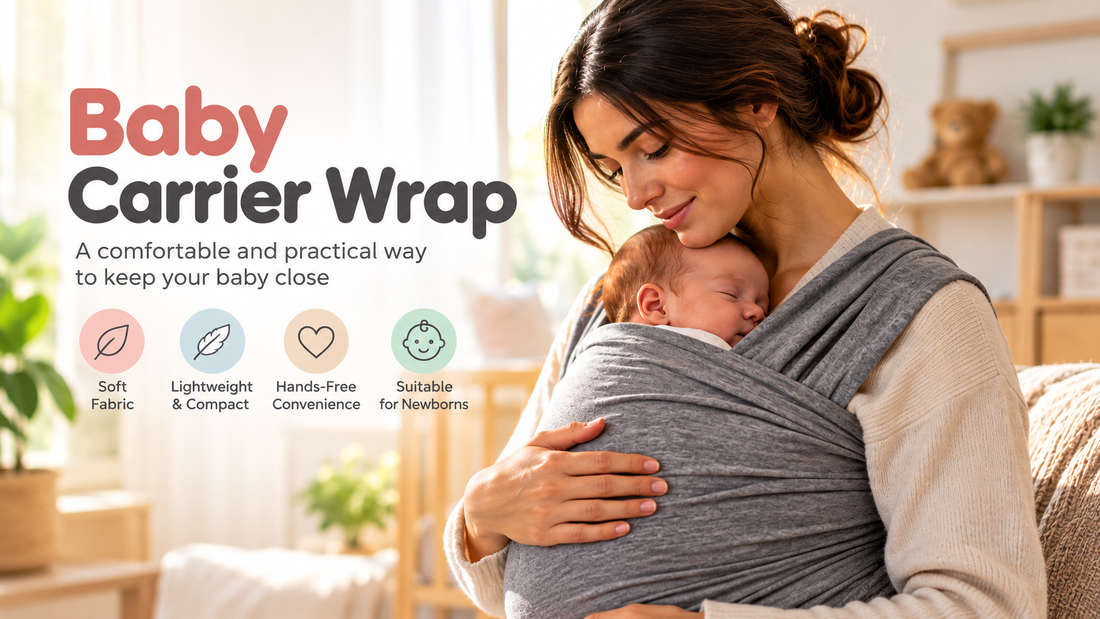
A baby carrier wrap gives parents a simple way to keep their little one close while keeping their hands more available throughout the day. Its soft fabric wraps around the caregiver and baby, creating a flexible carrying position without the bulky frame found in many structured carriers.
For parents comparing a baby wrap, baby sling wrap, or newborn wrap carrier, understanding fit, fabric, positioning, and everyday use makes choosing easier. This guide covers the main types, what to look for, how to use a wrap correctly, and how to find a comfortable option for you and your baby.
What Is a Baby Carrier Wrap

A baby carrier wrap is a soft fabric carrier designed to hold a baby close to the caregiver’s body. Instead of relying mainly on buckles and padded straps, the fabric is wrapped and adjusted to create a secure carrying position.
Parents often choose wraps because they are lightweight, compact, and easy to store when not in use. A wrap can also adapt to different body shapes because the fit depends largely on how the fabric is positioned and tightened.
Common benefits include:
-
Soft fabric around the baby
-
Compact and lightweight design
-
Adjustable fit for different caregivers
-
Hands-free carrying for everyday tasks
-
Close contact between baby and caregiver
-
Easy storage inside a changing or travel bag
For parents who want to compare wrap-style and structured options, the Baby Carriers collection at Mommy’s Mart provides several different carrier designs.
A wrap can therefore be a practical starting point for parents who prefer a softer and more flexible carrying option.
Baby Wrap vs Baby Sling Wrap
A baby wrap and a baby sling wrap both use fabric to carry a baby, but their construction can be different.
A traditional baby wrap usually uses a longer piece of fabric that passes around both shoulders and the caregiver’s body. A sling may use a shorter fabric section, rings, a pouch, or another adjustment system.
|
Feature |
Baby Carrier Wrap |
Baby Sling |
|
Main design |
Long wrapping fabric |
Fabric sling or pouch |
|
Weight distribution |
Usually across both shoulders |
May focus more on one shoulder |
|
Adjustment |
Tying and tightening fabric |
Depends on sling design |
|
Storage |
Very compact |
Compact |
|
Learning curve |
Requires some practice |
Often quicker to learn |
|
Newborn options |
Available |
Available |
Neither design is automatically the right choice for every parent. Comfort depends on the product, your baby’s stage, and how confidently you can achieve the correct fit.
The best option is the one that feels secure, comfortable, and practical for your normal routine.
Why Choose a Baby Wrap for a Newborn

Many parents consider a baby wrap for newborn use because the fabric can sit closely around a small baby without requiring a large structured frame.
A newborn wrap carrier may be useful at home, during short walks, while visiting family, or when you need to keep your baby nearby while moving around.
Parents commonly look for:
-
Soft material suitable for frequent contact
-
Secure support around the baby
-
A close carrying position
-
Easy adjustment
-
Lightweight construction
-
Simple storage between uses
Not every wrap is automatically suitable from birth. Always check the manufacturer’s recommended age and weight range before using any carrier with a newborn.
Choosing a product specifically designed for your baby’s current stage is more important than choosing one based only on appearance.
Stretchy Baby Wrap vs Woven Wrap
One of the main decisions when shopping for a baby carrier wrap is whether you prefer stretchy or firmer fabric.
A stretchy baby wrap contains material that gives slightly as it is pulled. This can make the wrap feel soft and adaptable around both caregiver and baby.
A woven wrap generally stretches less and can offer a firmer feel.
|
Consideration |
Stretchy Baby Wrap |
Woven Wrap |
|
Fabric feel |
Soft and flexible |
Firmer |
|
Beginner friendly |
Often easier to start with |
May require more practice |
|
Fit |
Moulds closely around the body |
Controlled through tying |
|
Storage |
Compact |
Compact |
|
Adjustment |
Based on stretch and tension |
Based mainly on tying |
|
Best use |
Depends on product specifications |
Depends on product specifications |
Parents new to babywearing may find a stretchy baby wrap comfortable to learn with, but correct tying remains essential.
Fabric type matters, but a secure fit should always come first.
What to Look for in the Best Baby Wrap

The best baby wrap is not simply the most expensive option. It should match your baby's stage, your body, and the situations in which you expect to use it.
Comfortable Fabric
A soft baby wrap spends a lot of time against both your clothing and your baby's body.
Look for fabric that feels soft without becoming difficult to control when tightened. Breathability and ease of cleaning are also useful for regular use.
Suitable Age Range
Never assume a wrap is suitable for newborns because it looks soft.
Check:
-
Minimum recommended age
-
Minimum and maximum weight
-
Recommended carrying positions
-
Manufacturer instructions
These details help you narrow your choice before comparing colours or designs.
Good Weight Distribution
An ergonomic wrap carrier should distribute weight rather than concentrating it in one narrow area.
Fabric spread smoothly across the shoulders and back can make everyday carrying more comfortable when the wrap is fitted correctly.
Easy Care
Baby carriers are likely to need regular cleaning.
A practical wrap should have clear washing instructions and fabric that suits regular family use.
The right balance of fabric, support, sizing, and maintenance will usually matter more than extra features.
How to Put On a Baby Carrier Wrap
Learning how to use a baby carrier wrap can look complicated at first, but following the same method each time makes the process easier.
Always use the instructions supplied with your specific carrier because tying methods vary between products.
A simple preparation process is:
-
Find the centre of the wrap
Identify the middle section before you begin tying. -
Position the fabric around your body
Follow the recommended pattern while keeping the fabric flat. -
Remove twists
Smooth the material over your shoulders and back. -
Create a snug starting fit
Avoid beginning with extremely loose fabric. -
Place the baby carefully
Support your baby with your hands while positioning the fabric. -
Adjust each section
Tighten and spread the material according to the manufacturer's instructions. -
Check the position again
Make sure your baby is secure and easy to monitor before moving around.
Practising the wrapping method without your baby first can make the first few uses much easier.
A consistent technique helps turn babywearing from something complicated into a simple part of your routine.
How Should a Baby Sit in a Wrap

Correct positioning is one of the most important parts of using an infant wrap carrier.
The baby should remain supported rather than hanging loosely inside the material. The fabric should also stay smooth enough to provide stable support instead of forming narrow twisted sections.
When checking the position, pay attention to:
-
The baby's face remaining visible
-
The nose and mouth staying uncovered
-
The head remaining in a position that allows easy breathing
-
The baby remaining close and supported
-
The fabric staying secure rather than becoming loose
For young infants in particular, caregivers should check positioning frequently. The U.S. Consumer Product Safety Commission advises keeping a baby's face visible and making sure the chin does not rest against the chest because that position can restrict breathing.
Good positioning is therefore essential every time you use a wrap, not only when you first put it on.
Baby Carrier Wrap Safety Tips
A baby wearing wrap can be convenient, but correct use must always come before convenience.
Parents should read the manufacturer's complete instructions before the first use and check the carrier regularly for damage or unusual wear.
Keep these basic habits in mind:
-
Keep your baby's face visible.
-
Keep fabric away from the nose and mouth.
-
Check your baby frequently.
-
Follow the recommended weight range.
-
Make sure the material remains snug.
-
Inspect seams and fabric before use.
-
Recheck the position after making adjustments.
-
Stop using damaged carriers.
Extra caution is particularly important with very young babies. CPSC guidance highlights increased suffocation concerns for infants younger than four months and recommends frequent checks during sling or wrap use.
Safe babywearing begins with correct positioning and regular checks throughout every use.
Common Baby Wrap Mistakes
Most baby wrap problems come from fit and positioning rather than from the idea of using a wrap itself.
Understanding common mistakes can make your first experiences easier.
Leaving the Wrap Too Loose
A loose baby carrier wrap can make it harder to maintain a stable position.
Start with the fabric comfortably snug and make adjustments according to the product instructions.
Allowing Fabric to Twist
Twisted fabric can create uneven pressure across the caregiver's shoulders and back.
Spread the material smoothly before finishing the wrap.
Buying Only by Colour
Colour and design matter, but they should not be the first selection criteria.
Age suitability, material, support, and fit are more important.
Ignoring the Manufacturer Instructions
Two wraps that look similar may have different recommended tying methods or usage limits.
Always follow the instructions for the exact product you own.
Avoiding these simple mistakes can make your wrap more comfortable and easier to use consistently.
Baby Carrier Wrap vs Structured Carrier
Parents do not have to use one carrier style throughout every stage.
A baby carrier wrap may suit one part of your routine while a structured carrier works better for another.
|
Feature |
Baby Carrier Wrap |
Structured Carrier |
|
Construction |
Soft fabric |
Padded structured design |
|
Fastening |
Wrapping and tying |
Buckles and straps |
|
Storage |
Very compact |
Usually larger |
|
Adjustment |
Fabric tension |
Adjustable straps |
|
Learning |
Requires practice |
Often quicker to put on |
|
Feel |
Soft and flexible |
More structured |
|
Suitable age |
Product dependent |
Product dependent |
Some parents prefer a newborn wrap carrier during the early months and later explore structured models for different outings.
You can compare both styles through Mommy’s Mart's Baby Carriers collection before deciding which format fits your routine.
Having more than one carrying option can also be useful as your baby's needs change.
Choosing a Wrap for Your Daily Routine
How you plan to use your carrier should influence your choice.
A parent mainly using a baby carrier wrap around the house may prioritise softness and quick storage. Someone planning frequent outings may care more about ease of tying and carrying comfort.
Think about these three situations.
At Home
A lightweight soft baby wrap can be convenient for keeping nearby without carrying a bulky piece of baby equipment around the house.
Choose something that is comfortable to put on regularly and easy to clean.
Short Outings
Compact wraps can fit easily into a baby bag when not being used.
Parents preparing for regular trips can also explore Mommy’s Mart's Baby Bags collection for storage options for everyday baby essentials.
Longer Trips
A wrap may not be your only travel solution.
For longer outings, parents can also compare Baby Strollers alongside carriers and decide which option works better for each trip.
Matching the carrier to your real routine usually leads to a better purchase than simply choosing the most popular style.
How to Make Baby Wearing More Comfortable
Small adjustments can make a noticeable difference when using a baby wearing wrap.
If the carrier feels uncomfortable immediately, do not assume you simply need to get used to it. Stop and check how the fabric is positioned.
Try to:
-
Spread the fabric evenly across your shoulders.
-
Remove twisted areas.
-
Check that the baby remains close to your body.
-
Adjust loose sections before continuing.
-
Recheck the fit if your shoulders or back begin to feel uncomfortable.
Comfort should come from proper weight distribution rather than constantly using your arms or shoulders to compensate for a loose carrier.
A properly adjusted wrap should feel supportive for both baby and caregiver.
How to Care for a Soft Baby Wrap

A soft baby wrap can come into contact with milk, food, sweat, and everyday dirt, so easy maintenance is worth considering before you buy.
Always follow the washing instructions for your exact product.
Basic care usually involves:
-
Treating stains without unnecessary delay
-
Using the recommended washing temperature
-
Allowing the fabric to dry properly
-
Storing the wrap somewhere clean and dry
-
Checking seams and fabric after washing
-
Avoiding continued use if you find damage
The Bnon Baby Wrap Carrier available at Mommy’s Mart uses cotton-Lycra fabric and is described as washable and easy to maintain.
Regular care helps keep an everyday carrier comfortable and ready for repeated use.
Bnon Baby Wrap Carrier for Newborn Use
Parents looking specifically for a baby wrap for newborn use can consider the Bnon Baby Wrap Carrier while comparing the available options.
According to its current Mommy’s Mart product information, it is designed for use from birth and uses cotton-Lycra fabric. The product description also highlights weight distribution across the shoulders and back and support for the baby's back and legs.
|
Feature |
Bnon Baby Wrap Carrier |
|
Carrier style |
Soft wrap |
|
Recommended stage |
From birth |
|
Fabric |
Cotton-Lycra |
|
Adjustment |
Wrap-style fit |
|
Care |
Washable |
|
Available colours |
Multiple options |
It can be compared with other products in the Baby Carriers collection if you are deciding between a soft wrap and a more structured design.
Comparing real product features makes it easier to choose a carrier based on your needs rather than appearance alone.
Why Shop Baby Carriers at Mommy’s Mart
At Mommy’s Mart, parents can compare baby carrier wrap options with structured carriers in one place, helping them choose according to their baby's stage and everyday routine.
The Baby Carriers collection includes:
-
Soft baby wraps
-
Structured carriers
-
Different carrying styles
-
Options for different stages and budgets
Parents looking for a newborn wrap carrier can also explore the Bnon Baby Wrap Carrier directly.
This makes Mommy’s Mart a simple place to compare carrying options before choosing what fits your routine.
Frequently Asked Questions
Can I use a baby carrier wrap from birth?
Some baby carrier wrap products are designed for use from birth, while others have a higher minimum age or weight. Always follow the manufacturer's specifications for the exact carrier.
The Bnon wrap available at Mommy’s Mart is currently described by the store as suitable from birth.
Is a stretchy baby wrap suitable for a newborn?
A stretchy baby wrap may be suitable when the product is specifically designed for newborn use and the baby can be positioned correctly.
Always keep the baby's face clear and follow the manufacturer's instructions.
What is the difference between a baby sling wrap and a baby wrap?
A baby sling wrap may use rings, a pouch, or a shorter fabric construction, while a traditional baby wrap usually uses a longer piece of material wrapped around the caregiver.
Individual designs can vary significantly between brands.
How tight should a baby carrier wrap be?
The wrap should be snug enough to keep the baby supported close to the caregiver without causing uncomfortable pressure.
If your baby repeatedly sinks lower or the fabric becomes loose, stop and readjust the carrier.
How do I know if my baby is positioned correctly?
Your baby should remain supported and easy to monitor, with the face visible and the nose and mouth free from fabric or obstruction.
For young babies, check the position frequently during use.
Are baby wraps difficult for beginners?
There can be a learning curve, especially when tying the fabric for the first time.
Practising the correct method without your baby can help you become more confident before regular use.
Is a baby carrier wrap better than a structured carrier?
Neither style is automatically better.
A wrap offers softness and compact storage, while structured carriers often use straps and buckles that some parents find quicker to adjust. The right choice depends on your routine and the product's suitability for your baby.
What fabric should I choose for a baby wrap?
Look for a fabric that provides a practical balance between softness, support, breathability, and ease of cleaning.
Cotton and cotton blends are common choices for everyday wraps.
Can two parents use the same baby wrap?
Many wraps can adapt to different caregiver body sizes because the fit is created by tying the fabric.
Each caregiver should learn how to secure and adjust the wrap correctly before carrying the baby.
Where can I buy a baby carrier wrap?
You can explore Baby Carriers at Mommy’s Mart, including soft wrap and structured carrier options for different everyday needs.
Comparing the carrier type, age suitability, fabric, and fit before ordering will help you choose more confidently.
Find the Right Baby Carrier Wrap
A baby carrier wrap can be a useful everyday option for parents who want a soft, compact way to keep their baby close. Start by checking age suitability, fabric, fit, safety instructions, and how easily the carrier works with your normal routine.
Explore the Mommy’s Mart Baby Carriers collection to compare a baby wrap, structured carrier, or newborn wrap carrier and choose the option that feels right for you and your baby.