
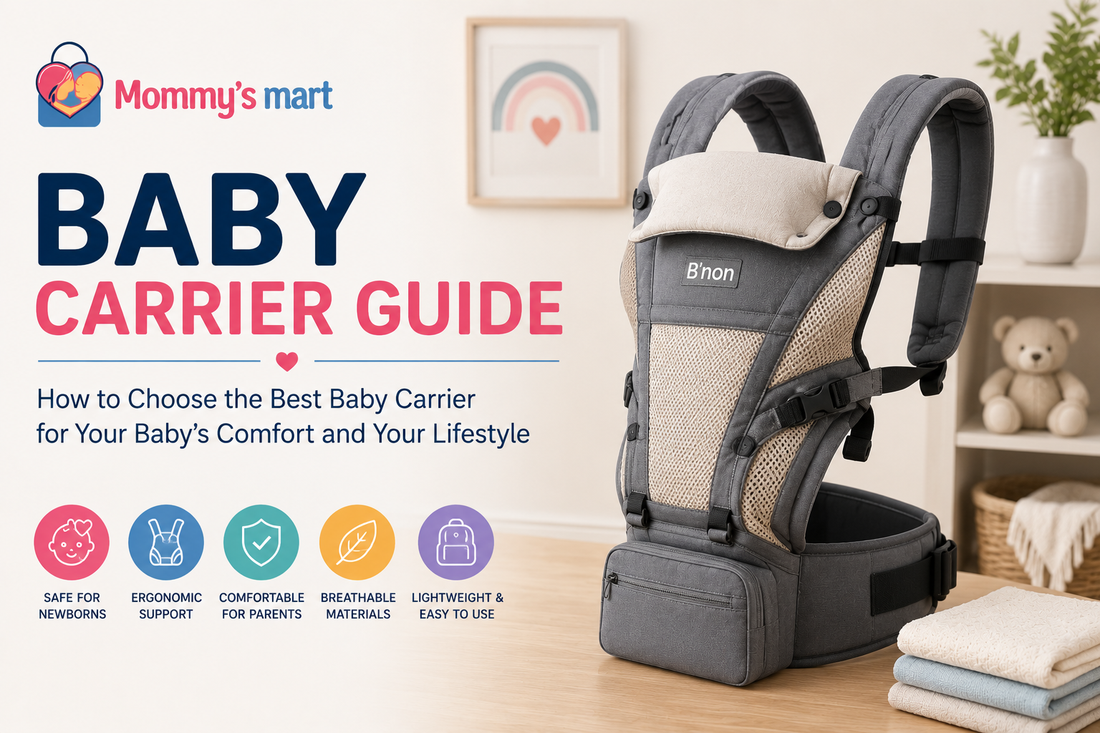
Choosing the right baby carrier can make everyday outings, quick errands and time at home more convenient while keeping your little one close. From a soft baby wrap to a structured ergonomic carrier or hip-seat design, each option serves a different routine and stage. The best choice depends on your baby’s age, the carrying positions you prefer, how long you expect to wear it and the level of support you need. This guide explains the main carrier styles, what to check before buying and how to choose a baby carrier that feels practical for both parent and child.
How to Choose the Best Baby Carrier

The best baby carrier is not automatically the most expensive or feature-packed model. It should fit your baby’s stage, your body and the way you expect to use it.
|
Buying Factor |
What to Check |
|
Baby’s age |
Follow the manufacturer’s minimum age and weight guidance |
|
Carrying position |
Check which positions the exact model supports |
|
Parent comfort |
Look at shoulder straps, waist support and adjustability |
|
Baby positioning |
Follow the carrier’s fitting instructions carefully |
|
Daily use |
Decide whether you need it for short or longer outings |
|
Climate |
Breathable materials may be useful in warmer weather |
|
Portability |
Wraps and lighter carriers can be easier to store |
|
Cleaning |
Check washing and care instructions |
Start With Your Baby’s Age
A newborn baby carrier needs to be specifically suitable for the baby’s current stage. Never assume that a carrier can be used from birth simply because it looks soft or adjustable.
Always check:
-
Minimum age or weight
-
Head and neck support requirements
-
Approved carrying positions
-
Strap adjustment
-
Manufacturer fitting instructions
For example, Mommy’s Mart currently lists the Bnon Baby Wrap Carrier as suitable from birth, making it one option parents can compare when shopping for a newborn-oriented carrier.
Think About How Often You Will Use It
If you expect to use a baby carrier every day, parent comfort and adjustability may deserve more attention than compact storage.
For occasional short outings, a lighter or simpler design may provide everything you need without unnecessary features.
You can browse the current Baby Carriers collection at Mommy’s Mart to compare several carrier styles in one place. The collection currently includes wrap, structured and other baby-carrying options.
Baby Carrier Types: Which One Fits Your Routine?
Different carrier types create very different wearing experiences. Choosing the right category first can make the buying process much easier.
|
Carrier Type |
Best For |
Main Advantage |
|
Baby wrap carrier |
Newborn-stage and close carrying |
Soft, adjustable fit |
|
Baby sling |
Quick, compact carrying |
Minimal design |
|
Structured carrier |
Regular everyday use |
Adjustable straps and support |
|
Front baby carrier |
Hands-free daily outings |
Easy parent access to baby |
|
Hip seat carrier |
Older babies where manufacturer-approved |
Added seated support |
|
Backpack carrier |
Specific outdoor or older-child use |
Designed for different carrying needs |
Baby Wrap Carrier
A baby wrap carrier uses a long piece of fabric that wraps around the parent and baby.
Wraps can appeal to parents who want:
-
A soft carrying setup
-
Compact storage
-
Flexible adjustment
-
Close contact during everyday activities
The most important part is learning how to tie and adjust the wrap correctly according to the product instructions.
Baby Sling
A baby sling is another relatively simple carrying style, but its construction differs from a wrap.
When comparing a sling with another baby carrier, check whether it suits your baby’s age, how the fabric is adjusted and which carrying positions are approved.
Structured Baby Carrier
A structured baby carrier typically uses padded or adjustable straps and may include a supportive waist section.
This type can appeal to parents who prefer a more defined setup rather than tying fabric before each use.
Read more about: Baby Grace Stroller – Discover & Buy Today
Ergonomic Baby Carrier: What Does That Mean?

Parents often search for an ergonomic baby carrier, but the word “ergonomic” should not be treated as a guarantee by itself.
The real question is whether the exact product can be adjusted correctly for both the baby and the person wearing it.
Features Worth Comparing
|
Feature |
Why It Matters |
|
Adjustable shoulder straps |
Helps adapt the carrier to the wearer |
|
Waist support |
Can help distribute weight |
|
Adjustable seat area |
Allows the setup to match the baby’s stage |
|
Head support |
May be important for younger babies |
|
Breathable material |
Useful during longer wear |
|
Multiple adjustments |
Helpful when different adults share the carrier |
The Chicco Soft and Dream baby carrier currently listed at Mommy’s Mart, for example, is described with padded shoulder straps, a supportive waist section, breathable materials and multiple carrying positions.
Fit Matters More Than Marketing Terms
A carrier can have many adjustment points and still feel uncomfortable if it is fitted incorrectly.
Take time to follow the manufacturer’s fitting instructions every time you change the wearer, carrying position or strap settings.
Newborn Baby Carrier vs Infant Carrier
The terms infant carrier and newborn carrier are often used interchangeably, but a model’s actual age and weight guidance matters more than the name.
|
Newborn-Focused Carrier |
General Infant Carrier |
|
Specifically approved for early use |
Age range can vary |
|
Often prioritizes close support |
May offer more carrying positions |
|
Head support may be especially important |
Design differs by model |
|
Fit must follow newborn instructions |
Fit changes as baby grows |
What Should You Check for a Newborn?
When choosing a baby carrier for the earliest stage, confirm the manufacturer’s guidance for:
-
Baby weight
-
Baby age
-
Head positioning
-
Leg positioning
-
Carrier height
-
Approved direction of carrying
A newborn baby carrier should be selected according to the exact product guidance, not only reviews or product photography.
Front Baby Carrier: Is It Good for Everyday Use?
A front baby carrier is one of the most familiar carrier formats because it keeps the child close to the parent’s torso.
Depending on the model, carrying positions can vary as the child develops.
When a Front Carrier Can Be Convenient
A front baby carrier may be useful for:
-
Short walks
-
Shopping
-
Moving around the home
-
Family visits
-
Situations where taking a stroller is inconvenient
The Kangaro MAX Carrier currently sold by Mommy’s Mart is listed with adjustable sizing and several wearing configurations, giving parents another structured option to compare.
Consider Parent Comfort Too
Do not evaluate a baby carrier only from the baby’s side.
If you plan to wear it frequently, check how the straps sit across your shoulders and how the weight feels after several minutes of use.
Baby Hip Seat Carrier: When Is It Useful?

A baby hip seat carrier adds a supported seat area to the carrying setup. Exact designs vary considerably, and age or weight suitability must be checked on the specific product.
|
Hip Seat Question |
Why It Matters |
|
Is it approved for your baby’s stage? |
Models have different limits |
|
Is the waistband adjustable? |
Parent fit affects comfort |
|
Can the seat be used independently? |
Depends on model |
|
What positions are supported? |
Not every carrier works the same way |
|
How bulky is it? |
Relevant for travel and storage |
Choose It for a Real Need
A hip-seat baby carrier may appeal to parents who regularly carry an older baby for shorter periods, but there is no advantage in choosing one if a simpler carrier already suits your routine.
Baby Backpack Carrier: Is It the Same as a Regular Carrier?
A baby backpack carrier is generally designed for a different style of carrying than a newborn wrap or standard front carrier.
Some backpack-style products are intended for older babies or outdoor activities rather than newborn use.
Compare the Exact Purpose
|
Carrier Style |
Typical Use |
|
Wrap |
Close everyday carrying |
|
Front carrier |
Everyday hands-free use |
|
Hip seat |
Shorter carrying with added seat support |
|
Backpack carrier |
Specific outdoor or older-child use |
When shopping for any baby carrier, choose according to the manufacturer’s intended age and use rather than assuming every carrier style is interchangeable.
Baby Carrier vs Stroller: Which One Do You Need?

A baby carrier and stroller solve different problems, and many families find both useful.
|
Baby Carrier |
Baby Stroller |
|
Hands-free carrying |
Baby travels in a separate seat |
|
Easier in tight spaces |
Useful for longer outings |
|
Compact to store |
Usually offers more storage |
|
Useful for quick trips |
Useful for carrying bags and essentials |
|
Close parent-baby positioning |
Reduces the need to carry the baby |
When a Carrier Makes More Sense
A baby carrier can be particularly convenient for stairs, short errands, crowded places or quick family visits.
When a Stroller Makes More Sense
A stroller may be more practical during longer outings, when you need more storage or simply want another way to transport your baby.
Mommy’s Mart has both Baby Carriers and Baby Strollers, allowing parents to compare both transport styles according to their routine.
Read more about: Baby Grace Stroller – Discover & Buy Today
How to Find the Best Baby Carrier for Travel
The best baby carrier for travel should be easy to pack, comfortable to wear and suitable for the baby’s current stage.
Travel Carrier Buying Guide
|
Travel Priority |
What to Look For |
|
Packing |
Compact folded or stored size |
|
Long journeys |
Comfortable parent adjustment |
|
Warm conditions |
Breathable material |
|
Multiple adults |
Easy strap adjustment |
|
Quick use |
Simple fitting process |
|
Newborn travel |
Approved newborn configuration |
Baby Wearing During Short Trips
Baby wearing can be useful when moving through places where a stroller feels inconvenient, but the carrier still needs to be worn correctly.
Before longer trips, practice fitting the baby carrier at home so adjustments are familiar before you need them outside.
How to Choose the Right Size and Fit
A poorly adjusted baby carrier can feel uncomfortable even when the design itself is suitable.
Parent Fit Checklist
Check whether:
-
Shoulder straps sit comfortably
-
The waistband can be adjusted securely where included
-
The carrier is centered correctly
-
The baby sits according to the manufacturer’s instructions
-
Buckles or ties are secured as directed
-
The baby remains visible and appropriately positioned
Recheck the Fit as Your Baby Grows
A baby carrier that fits well today may need a different adjustment after your baby gains weight or grows taller.
Review the instructions periodically instead of keeping the same settings indefinitely.
Baby Carriers Available at Mommy’s Mart
Mommy’s Mart currently has a dedicated Baby Carriers collection with eight listed products, including wrap carriers and structured options from Bnon, Chicco, Kangaro and Petit Bebe.
Bnon Baby Wrap Carrier
The Bnon Baby Wrap Carrier is currently described as suitable from birth and uses a cotton-Lycra wrap design.
This makes it relevant for parents specifically researching a baby wrap carrier or newborn baby carrier.
Chicco Soft and Dream
The Chicco Soft and Dream baby carrier is described with adjustable seating, padded shoulder straps, waist support, breathable materials and multiple carrying positions.
It may suit shoppers comparing a more structured baby carrier for regular use.
Kangaro MAX Carrier
The Kangaro MAX Carrier is another structured option currently available in the collection, with adjustable sizing and several wearing configurations listed on its product page.
Petit Bebe Carrier
Mommy’s Mart also lists the Petit Bebe baby carrier with padded shoulder straps and a safety belt in the current product description.
Explore the Baby Carriers collection at Mommy’s Mart and compare the style, fit and age guidance that best suit your family.
Common Baby Carrier Buying Mistakes

A few simple checks can prevent you from choosing a baby carrier that looks good online but does not match your routine.
|
Common Mistake |
Better Approach |
|
Buying by design only |
Compare fit and approved age |
|
Assuming every carrier suits newborns |
Check the exact manufacturer guidance |
|
Ignoring parent comfort |
Compare straps and adjustment |
|
Buying too many carrying positions |
Choose positions you will actually use |
|
Ignoring cleaning instructions |
Check fabric care before purchasing |
|
Choosing by reviews alone |
Verify specifications separately |
|
Forgetting other caregivers |
Consider adjustability between adults |
Avoid Overbuying Features
The best baby carrier is often the simplest model that comfortably meets your needs.
If you only plan to use one or two approved carrying positions, a product with many extra configurations may not provide meaningful additional value.
Why Choose Mommy’s Mart for Baby Carriers?
Mommy’s Mart brings baby carrier products together with related travel and everyday baby categories, allowing parents to compare the items needed for different types of outings. The store’s current navigation includes Baby Carriers, Baby Strollers, Car Seats, Bags and other baby essentials.
You can explore:
The current best-selling collection also includes the Bnon Baby Wrap Carrier, giving parents another way to discover carrier options while browsing popular baby essentials.
Shop Baby Carriers at Mommy’s Mart and choose the option that matches your baby’s stage, your preferred carrying style and your everyday routine.
Read more about: Baby Grace Stroller – Discover & Buy Today
Frequently Asked Questions About Baby Carriers
What Is the Best Baby Carrier?
The best baby carrier is one that fits your baby’s age, your body, your preferred carrying position and how frequently you plan to use it. There is no single carrier that is best for every parent.
Can I Use a Baby Carrier for a Newborn?
A baby carrier can be used for a newborn only when the manufacturer specifically approves the exact product for that stage and you follow its positioning and fitting instructions.
What Is an Infant Carrier?
An infant carrier is a carrying product designed for babies within a specified age or weight range. Always check the individual product guidance because ranges vary.
Is a Baby Wrap Carrier Better Than a Structured Carrier?
A baby wrap carrier can provide a soft, flexible fit, while a structured carrier may offer more defined straps and adjustments. The better option depends on your preferences and routine.
What Is an Ergonomic Baby Carrier?
An ergonomic baby carrier generally refers to a carrier designed around adjustable positioning and wearer support. Focus on the specific fit and manufacturer instructions rather than the label alone.
Is a Front Baby Carrier Good for Daily Use?
A front baby carrier can be practical for daily use when the model is suitable for your baby’s stage and feels comfortable for the person wearing it.
What Is a Baby Hip Seat Carrier?
A baby hip seat carrier includes a supportive seat section as part of the carrying setup. Age, weight and approved carrying positions depend on the exact product.
When Can I Use a Baby Backpack Carrier?
A baby backpack carrier should only be used according to the manufacturer’s age, developmental and weight guidance. Many backpack-style carriers serve different needs from newborn carriers.
Is Baby Wearing Better Than Using a Stroller?
Baby wearing and stroller use serve different situations. A carrier can be useful for hands-free, compact transport, while a stroller may be more practical for longer outings and additional storage.
Where Can I Buy a Baby Carrier Online?
You can browse the current Baby Carriers collection at Mommy’s Mart to compare wrap and structured options based on your baby’s stage and your carrying preferences.
Find the Right Baby Carrier Today
The right baby carrier should keep everyday carrying practical while matching your baby’s stage and your own comfort needs. Compare the fit, approved positions and features you will genuinely use, then explore Mommy’s Mart baby carrier options and choose with confidence.