
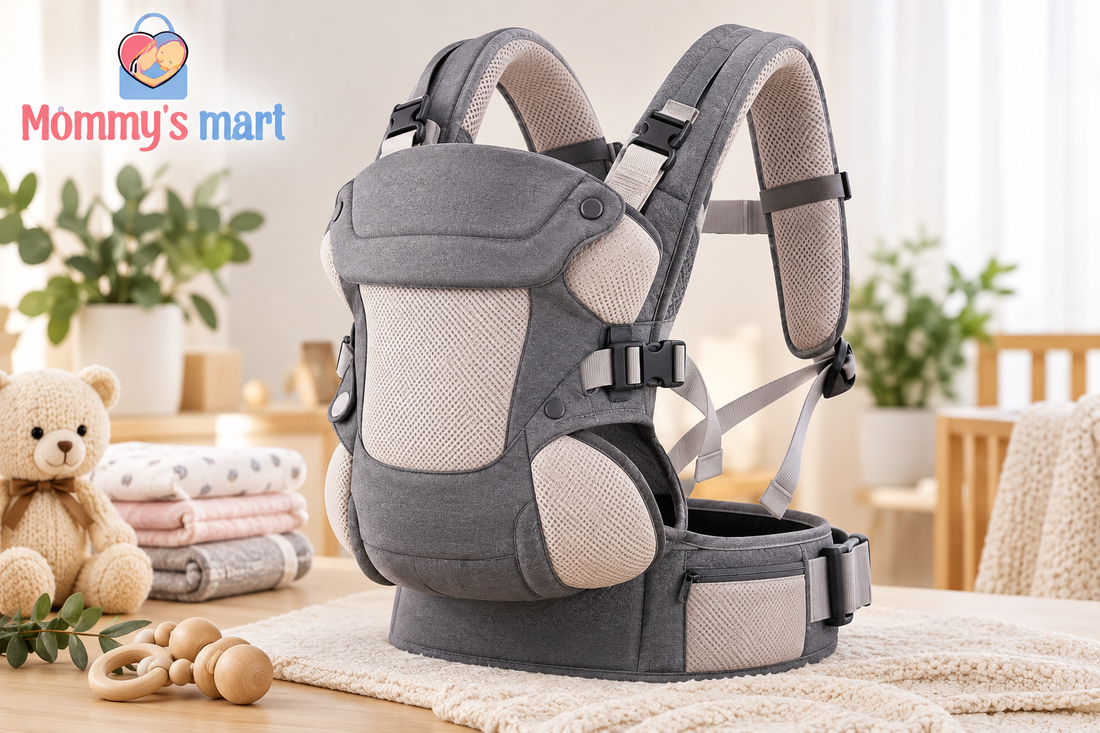
A baby back carrier can give parents a practical hands-free option as their child grows and becomes ready for different carrying positions. Instead of keeping the baby exclusively at the front, some structured carriers are designed to support approved back-carrying positions for older babies or toddlers.
Choosing a back baby carrier requires more than finding comfortable shoulder straps. Your child's developmental stage, the carrier's approved positions, caregiver fit, weight limits, and intended activity all matter. This guide explains how back carriers work, when they may be appropriate, and what to compare before buying.
What Is a Baby Back Carrier

A baby back carrier is a babywearing product designed to position a child on the caregiver's back when that carrying position is specifically supported by the product.
Back carriers can range from soft structured designs to larger framed child carrier backpack models created for outdoor activities.
Common features may include:
-
Adjustable shoulder straps
-
Waist support
-
Secure child seating
-
Head or back support
-
Adjustable buckles
-
Padded contact areas
-
Storage pockets
-
Multiple carrying positions
Parents can browse the Baby Carriers collection at Mommy’s Mart when comparing structured and soft carrier styles.
The first step is always confirming that the exact carrier is designed for the position you want to use.
Front Carrier vs Back Baby Carrier
Front and back carrying can serve different stages and routines.
A younger baby may require close front carrying according to the manufacturer's instructions, while an older child may eventually be eligible for a supported back-carrying position in compatible carriers.
|
Feature |
Front Carrying |
Back Carrying |
|
Baby visibility |
Easier to monitor directly |
Requires different monitoring |
|
Typical stage |
Often used earlier |
Usually later, product dependent |
|
Weight distribution |
Front of caregiver |
Across back and waist |
|
Outdoor walking |
Useful |
Can be practical for longer walks |
|
Putting carrier on |
Often simpler |
May require more practice |
|
Child position |
Product dependent |
Product dependent |
Back carrying should never be started simply because the child feels heavy at the front.
Developmental readiness and the carrier instructions should decide when the position becomes appropriate.
When Can You Use a Baby Carrier on Your Back
There is no single age that applies to every baby wearing backpack or structured back carrier.
The correct time depends on the product and the child's development.
Before using a back position, confirm:
-
The carrier specifically allows back carrying.
-
Your child meets the minimum age requirements.
-
Your child meets the required weight range.
-
Any developmental requirements are met.
-
You understand how to position the child safely.
-
All straps and buckles can be checked correctly.
Some carriers may require stronger head, neck, or torso control before back carrying is permitted.
Never copy a carrying position from another brand or model because two visually similar carriers may have very different instructions.
Waiting until both child and carrier are ready makes back carrying much easier to use correctly.
Main Types of Baby Back Carriers
Parents searching for a backpack carrier for baby will usually encounter several carrier styles.
Soft Structured Carrier
A soft structured carrier uses fabric, straps, and buckles without a large external frame.
These models are generally more compact and may be useful for:
-
Everyday walking
-
Shopping
-
Family visits
-
Travel
-
Short outdoor trips
The approved positions depend entirely on the model.
Framed Child Carrier Backpack
A child carrier backpack uses a more substantial frame and is commonly associated with outdoor walking or hiking.
It may include:
-
Defined child seat
-
Larger waist support
-
Storage compartments
-
Adjustable torso fit
-
Stronger external structure
Multi-Position Carrier
Some structured carriers support several configurations as the child grows.
Mommy’s Mart currently offers structured products such as the Kangaro MAX Carrier, which is listed with adjustable sizing and several wearing configurations.
Choosing the right category helps you avoid paying for a larger carrier when a compact model would suit your routine better.
What Makes an Ergonomic Back Carrier

An ergonomic back carrier should support both the child and the caregiver rather than simply adding thick padding.
Good support starts with correct positioning.
Important features include:
-
Adjustable shoulder straps
-
Supportive waist section
-
Stable child seat
-
Correct torso adjustment
-
Appropriate weight range
-
Secure fastening points
-
Comfortable weight distribution
A carrier should remain close to the caregiver instead of pulling backward during walking.
For parents comparing structured options, the Chicco Soft and Dream Baby Carrier includes padded shoulder straps, waist support, breathable sections, and an adjustable seat.
Ergonomics comes from the full carrier setup, not one individual feature.
How to Put On a Back Baby Carrier
Using a back baby carrier can require more practice than a basic front position.
Always follow the exact method recommended by the manufacturer.
A general preparation routine includes:
-
Adjust the carrier first
Loosen or prepare the straps as directed. -
Position the child securely
Use the manufacturer's recommended loading method. -
Move into the back position
Follow the approved technique rather than improvising. -
Secure all straps
Check shoulder, waist, and chest connections where included. -
Check the child's position
Make sure the child remains supported. -
Test the fit
Move carefully before starting a longer walk. -
Recheck after movement
Stop if the carrier shifts or feels unbalanced.
Practising with another adult nearby can be useful while learning a new carrying position.
A consistent setup routine makes back carrying easier and more predictable.
Baby Backpack Carrier for Toddlers
A toddler back carrier can become appealing as children become heavier and front carrying starts to feel less practical.
The caregiver's back can provide a different carrying position, while a supportive waist belt may help distribute load more effectively on compatible designs.
For toddler use, compare:
|
Factor |
What to Check |
|
Maximum weight |
Child must remain within the limit |
|
Seat size |
Should suit the child |
|
Shoulder adjustment |
Must fit caregiver correctly |
|
Waist belt |
Helps manage load where included |
|
Child support |
Must match product design |
|
Carrier weight |
Adds to total carrying load |
Mommy’s Mart lists the Kangaro MAX Carrier for a stated range of 4–25 kg, although parents should still follow the exact approved carrying positions described by the manufacturer.
A growing toddler makes carrier fit and weight distribution increasingly important.
Baby Back Carrier vs Baby Backpack Carrier

The terms baby back carrier and baby backpack carrier are often used interchangeably online, but they can describe different products.
|
Baby Back Carrier |
Baby Backpack Carrier |
|
Usually refers to carrying position |
Often refers to carrier construction |
|
Can be soft structured |
Can be soft or framed |
|
May support multiple positions |
Often designed like a backpack |
|
Can be compact |
Framed versions can be bulky |
|
Everyday models available |
Outdoor models common |
This distinction matters when shopping.
Someone searching for a lightweight back-carrying option may not need a full framed hiking backpack.
Understanding the terminology makes product comparisons much more accurate.
Hiking Baby Carrier for Outdoor Trips
A hiking baby carrier is designed around longer outdoor carrying and may offer more structure than an everyday carrier.
Families may consider one for:
-
Nature walks
-
Long outdoor routes
-
Sightseeing
-
Uneven paths
-
Locations with stairs
-
Destinations where strollers are inconvenient
Outdoor models may also include useful storage for clothing, water, wipes, or other essentials.
However, the carrier itself can be heavier than a soft structured model.
For parents who mainly take short daily walks, the structured products in the Baby Carriers collection may be easier to manage than a full hiking frame.
Your most common activity should determine how much structure you actually need.
Outdoor Baby Carrier Features to Compare
An outdoor baby carrier needs to remain comfortable during longer movement and changing conditions.
Look beyond the number of pockets and accessories.
Useful features may include:
-
Strong waist support
-
Adjustable shoulder straps
-
Breathable contact areas
-
Secure child harness
-
Suitable seat design
-
Practical storage
-
Durable materials
-
Easy-to-reach adjustments
Storage is useful outdoors, but carrying extra items also adds weight.
If you prefer to separate your child-carrying load from nappies and other essentials, Mommy’s Mart has a dedicated Baby Bags collection.
Good outdoor equipment should help reduce unnecessary effort rather than create more of it.
Baby Back Carrier vs Stroller
A baby back carrier and stroller can both be useful during family outings, but they work best in different environments.
|
Situation |
Back Carrier |
Stroller |
|
Stairs |
Usually easier |
More difficult |
|
Narrow spaces |
Practical |
Can be bulky |
|
Flat long routes |
Depends on caregiver |
Often comfortable |
|
Child weight |
Carried by adult |
Supported by stroller |
|
Storage |
Limited |
Usually more |
|
Uneven surfaces |
Carrier can be practical |
Wheel dependent |
|
Quick movement |
Convenient |
Requires pushing |
Families do not need to choose only one option.
Mommy’s Mart also offers a wide Baby Strollers collection for parents who want wheeled transport for longer days or heavier children.
Using a carrier and stroller for different situations can make outings more flexible.
Travel Baby Carrier for Airports and Trips
A travel baby carrier can be useful when moving through airports, stations, busy streets, or locations with frequent stairs.
A soft structured carrier is generally easier to pack than a large framed backpack.
Before travelling, ask:
-
Can the carrier fit easily in your luggage?
-
How long will you wear it each day?
-
Does your child meet the carrier requirements?
-
Is the climate suitable for close carrying?
-
Will another caregiver share the carrier?
-
Do you need separate storage for baby essentials?
A Baby Bag can keep nappies, spare clothes, feeding essentials, and personal items separate from the carrier.
The right travel carrier should reduce the amount of equipment you struggle to manage during the trip.
Baby Back Carrier in Warm Weather
Using a baby wearing backpack or structured carrier can feel warmer because the child and caregiver remain close during movement.
This matters especially during outdoor trips.
Helpful practices include:
-
Use lightweight clothing.
-
Avoid unnecessary layers.
-
Take regular breaks.
-
Check the child frequently.
-
Choose breathable materials when available.
-
Avoid extended carrying in extreme heat.
-
Recheck comfort after longer walks.
Mommy’s Mart describes the Chicco Soft and Dream Baby Carrier as using soft breathable materials and mesh side panels, which can be useful comparison features when evaluating structured carriers.
Weather can change how comfortable the same carrier feels from one day to another.
Back Carrier Comfort for Parents

A baby back carrier must fit the caregiver correctly because the adult carries both the child and the carrier itself.
Shoulder pain or excessive pulling may indicate poor adjustment.
For better fit:
-
Position the waist support correctly.
-
Tighten the shoulder straps evenly.
-
Keep the child close to your centre of gravity.
-
Avoid twisted straps.
-
Check that the carrier is not leaning.
-
Reassess the fit as your child gains weight.
If two adults share the carrier, each should adjust it separately.
A good carrier should adapt to the caregiver rather than forcing the caregiver to adapt to a poor fit.
Back Carrier Comfort for the Child
Parents naturally focus on their own shoulders and back, but the child must also remain correctly supported.
The exact position depends on the carrier design.
Check:
-
Seat support
-
Leg position
-
Back support
-
Head support where needed
-
Harness fit
-
Fabric pressure points
-
Child temperature
Never modify the carrier by adding unapproved cushions or padding to change the fit.
Use the manufacturer's adjustment system instead.
Correct child positioning is just as important as adult comfort.
Kangaro MAX as a Structured Carrier Option
Parents researching a backpack carrier for baby may also want to compare structured carriers currently available through Mommy’s Mart.
The Kangaro MAX Carrier is currently listed with:
-
Adjustable height and width
-
A stated range of 4–25 kg
-
Several wearing configurations
-
Head support
-
Large storage pocket
-
Adjustable strap setup
Because carrying positions can have specific instructions, parents should check the product manual before assuming every configuration allows the baby to ride directly on the back.
It can still provide a useful structured comparison for families researching versatile carrier designs.
Kangaro KLICK for Everyday Carrying
Another option in the Baby Carriers collection is the Kangaro KLICK Carrier.
Mommy’s Mart currently describes the model with:
-
Fully padded cotton material
-
Adjustable sizing
-
Headrest
-
Pocket
-
Clip fastening
-
Listed use from one month to three years
The KLICK is useful to compare with larger backpack-style carriers when you mainly need an everyday structured carrier.
A compact structured design may be more practical than outdoor equipment for normal daily trips.
Common Baby Back Carrier Mistakes

Back carrying becomes easier when parents avoid a few common mistakes.
Moving to Back Carrying Too Early
Do not use a back position until both the child and carrier meet all requirements.
Assuming Every Carrier Supports Back Carrying
A product looking like a backpack does not mean the manufacturer approves that position.
Carrying Too Much Extra Weight
Large storage pockets can tempt parents to overload the carrier.
Ignoring Adult Fit
Poorly adjusted shoulder or waist support can make a good carrier feel uncomfortable.
Skipping Practice
Putting a child onto your back can require more technique than front carrying.
Using Another Carrier's Instructions
Always follow the manual for the exact model you own.
Avoiding these mistakes helps create a more predictable carrying routine.
How to Choose the Best Baby Back Carrier
The best baby back carrier is the one that matches both your child and the activity you expect to do.
Use this order when comparing products:
-
Check approved positions
Confirm that back carrying is specifically supported. -
Check age and weight requirements
Make sure your child falls within the approved range. -
Compare child support
Look at seat, harness, and back support. -
Compare caregiver fit
Review waist and shoulder adjustment. -
Consider carrier weight
Larger framed models add more load. -
Think about your routine
Choose everyday, travel, or hiking features accordingly. -
Compare available alternatives
Do not pay for features you are unlikely to use.
You can browse Baby Carriers at Mommy’s Mart to compare structured and soft options before deciding what level of support fits your routine.
A clear buying checklist is more useful than choosing based on popularity alone.
How to Care for a Baby Wearing Backpack
A baby wearing backpack may collect sweat, food, dust, and outdoor dirt during regular use.
Always follow the manufacturer's care instructions.
General maintenance includes:
-
Clean stains reasonably quickly.
-
Check buckles regularly.
-
Inspect straps and seams.
-
Allow damp fabric to dry fully.
-
Clean storage pockets.
-
Inspect a frame if the carrier uses one.
-
Store the carrier somewhere dry.
-
Stop using it if a structural component becomes damaged.
Do not wash structured parts in a way that could damage internal support or fastening systems.
Simple regular care helps keep the carrier easier to inspect and use.
Why Shop Baby Carriers at Mommy’s Mart
At Mommy’s Mart, parents can compare several babywearing styles alongside other travel essentials.
The Baby Carriers collection includes:
-
Structured carriers
-
Soft baby wraps
-
Adjustable models
-
Different price ranges
Parents can also explore Baby Strollers and Baby Bags for a complete everyday travel setup.
This makes it easier to choose products according to how your family actually moves.
Frequently Asked Questions
What is a baby back carrier?
A baby back carrier is a carrier designed to position a child on the caregiver's back when that position is specifically approved by the manufacturer.
It can be soft structured or part of a larger backpack-style carrier.
When can a baby go in a back carrier?
There is no universal age.
The baby must meet the carrier manufacturer's age, weight, and developmental requirements before back carrying begins.
Is a baby back carrier good for toddlers?
A toddler back carrier can be practical because older children are heavier and may become less comfortable to carry at the front.
Always check maximum weight and approved carrying positions.
Is a back baby carrier better than front carrying?
Neither position is always better.
Front carrying may suit earlier stages, while approved back carrying can become practical later as the child grows.
Can I hike with a baby back carrier?
You can use a hiking baby carrier when it is specifically designed for outdoor use and your child meets all product requirements.
Compare fit, ventilation, weight, storage, and support before longer walks.
Is a baby backpack carrier the same as a hiking carrier?
Not necessarily.
A baby backpack carrier can describe a structured carrier worn like a backpack, while hiking carriers are usually larger products built specifically for outdoor activities.
What should I look for in an ergonomic back carrier?
Look for appropriate child support, adjustable shoulder straps, supportive waist adjustment, stable positioning, and a weight range suitable for your child.
Fit matters more than padding alone.
Can I use a baby back carrier for travel?
A compact travel baby carrier can be useful in airports, stations, crowded destinations, and locations with stairs.
Large hiking carriers may take more luggage space.
How do I know whether my carrier supports back carrying?
Read the manufacturer's manual or official product instructions.
Never assume back carrying is allowed simply because the carrier has backpack-style shoulder straps.
Where can I shop for structured baby carriers?
Parents can explore the Mommy’s Mart Baby Carriers collection, including structured models from Kangaro, Chicco, Petit Bebe, and other carrier styles.
Compare the exact approved positions of each model before choosing.
The right carrier should always match your child’s current stage and your intended use.
Choose the Right Baby Back Carrier
A baby back carrier can become a practical option as your child grows, especially for travel, walking, and activities where hands-free movement matters. The key is choosing a carrier that explicitly supports the carrying position you want and fits both the child and caregiver correctly.
Explore the Baby Carriers collection at Mommy’s Mart, compare structured options such as Kangaro MAX and Kangaro KLICK, and choose according to approved positions, weight range, comfort, and your everyday routine.